Search This Blog

Monday, 26 September 2011

Broadcast Television Series Post Production

The explosion of digital camera formats has given producers an unprecedented variety of choices for shooting scenes: Flip Phones, iPhones, Canon D5 and D7 cameras, Panasonic P2 and AVX-HD cameras, Arri Alexa, Sony F3 and numerous others, each with its own unique CODEC. Unfortunately, this variety can create a whole new range of headaches when its time to ingest the footage into non-linear editing systems. PPD has experience with all these formats and can work with clients to find solutions to their digital workflow challenges.

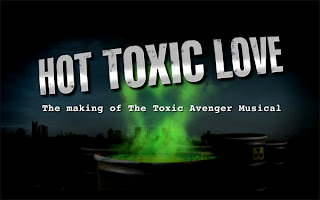
For example, the television documentary 'Hot Toxic Love' included footage from XDCAM-EX, Panasonic P2, Panasonic DVCPRO-HD, AVC50 and AVC100. Our Trusted Post Production Team found a workflow to ingest it all into our Avid Media Composer system. We provided the complete post production process including: offline editing, online conform, colour grading, closed captioning, descriptive video and final delivery on HDCAM and Digital Betacam. Our Avid Certified Service Representative (ACSR) and editor Erin Carroll oversaw the post production process, setting up the media management as well as setting the tone for the project. Michael Burshtyn completed the offline of nearly sixty hours of material, crafting it into the final 44 minute documentary which aired nationally on CityTV HD.

For the Broadcast TV market we have been providing offline and online editing services for many of Canada’s top production companies and broadcasters. If you’re a television producer, line producer or post production supervisor, our Broadcast Demo Reel shows examples of our Television Post Production for Reality TV Series, Poker Shows, Sports Programming, Music Specials and Documentaries. Documentary and Independent Film producers will also be interested in our Film and Documentary Reel.

Monday, 12 September 2011

Digital Capture and Delivery Solutions

PPD offers solutions for Producers, Directors and Editors who prefer to edit in their own Final Cut Pro, Avid Media Composer, Avid Symphony or Adobe Premier suites.  

For example, a CBC documentary is currently being edited using the production company’s in-house Avid Media Composer. PPD digitized all the HDCAM footage to Avid media and copied the files to the client’s hard drive. Once they have picture-lock they will send us the Avid sequence to conform, colour grade, close caption and create a descriptive video (DV) track. We will then process the audio tracks with our Dolby-E encoder and lay the final documentary back to HDCAM (with Dolby-E) as well as to HDCAM-SR with separate audio stems.

Another client edits a Triathlon TV series in his office which is over 85 km. from PPD.  Once an episode is locked he couriers us a fully rendered QuickTime movie along with a transcript. We caption the episode, output from our Avid Media Composer with closed captioning (CC) to HDCAM and ship directly to TSN, ready for broadcast. Our editors quality control the show during output to ensure there are no technical glitches and that broadcast standards are met.

Our clients come to PPD for digital media outputs and delivery knowing that we carefully watch every show we output. It’s not just another dub. If our assistant editor notices a problem with the QuickTime movie file we will call the client to discuss the issue and their options. Our client’s love the fact that we take an interest in their shows and that they don’t get rejected by the broadcaster for something which could have easily been fixed when the show was output to tape.

If you require video capture from DVCPRO-HD, HDCAM or HDCAM-SR or output to any of those formats PPD has the experience and talent to deliver.


Tuesday, 6 September 2011

Utilizing DOLBY® E To Reduce Show Delivery Costs

Typically the broadcasters will specify multiple audio tracks that need to be delivered like a stereo mix, 5.1 surround mix, descriptive video (DV), music and sound effects tracks (M&E). Naturally, in order to provide all this audio, the tape format of choice is HDCAM-SR which has up to 12 available audio tracks. However, if the broadcaster and producer decide to utilize DOLBY E, they can squeeze all of the required audio tracks on to the cheaper HDCAM (non-SR) format with only 4 audio available tracks.


DOLBY E is an audio encoding/decoding technology that allows up to 8 channels of discrete audio to be compressed on to only 2 audio tracks. Typically it's used to embed a 5.1 surround and a stereo mix on to a tape master.

Lately we've been working with various audio post houses to take their final show mixes and an add a descriptive video (DV) recording done by us. At PPD we encode to DOLBY E and deliver HDCAM broadcast masters with the surround and DV stereo mix. We put this on tracks 3 & 4 of the tape and then the standard non-encoded stereo mix on tracks 1 & 2. 

Producers who are confused by all the HD delivery specifications sent to them by Broadcasters or Distributors can call us to help them cut through the techno-babble and do things faster and cheaper.

Wednesday, 31 August 2011

Independent HD Feature Film Deliverables

When independent filmmakers finally get their film sold through a distributor they are often faced with a daunting list of deliverables. PPD has been working with independent producer Judd Tilyard of Dimeworth Films to prepare all the deliverables for their 88 min. HD Feature “Battleground”.  It was shot on Red Camera and edited on Sony Vegas. Judd gave PPD a fully rendered QuickTime movie (1080p23.98) with an image ratio of 2:53:1. The film needed a minor change to the credits which editor Michael Burshtyn carried out. Then we added textless elements, a trailer and 10 tracks of audio to the timeline, (including the 5.1 stems). There was a concern regarding video and audio levels on the original QuickTime movie; using our HD Harris Scope we were able to adjust levels to Broadcast Safe Standards as required before creating the other versions. 

The deliverables called for three versions of the film in both North American and European broadcast standards. To achieve this we panned and scanned the film for both a 16:9 full-frame version and a 4:3 full-frame version. PAL transcoded dubs of each format were also created.  In the end we delivered three versions of the movie, (including textless elements and a trailer), on HDCAM-SR at 23.98 and 25, on Digital Betacam at 29.97 and 25, and on DVDs at 23.98 and 25. 

Judd commented that he was “thrilled with the great service, prices and technical expertise at PPD!”.


Friday, 12 August 2011

Using Carbon Copy Cloner to copy camera original footage


At Post Producers Digital we've been using this great Mac OSX shareware application to help safely copy large files from one drive to another. Using 'Carbon Copy Cloner' is proving to be faster than copying via the Finder, it can be stopped and started, and it'll verify the integrity of the copied files.


Here's the numbered steps on how to copy files from one drive to another. With these customized settings the application will not erase any files on the destination drive. If it finds a conflict with any files containing identical names but different dates or sizes it'll move them into a subfolder to be dealt with by you afterward.


Thursday, 11 August 2011

PPD Provides Digital Dailies For TV Series

Post Producers Digital is providing the digital dailies for a 13-episode TV series currently in production. The client's DOP is shooting with dual Sony F3 cameras (PMW-F3) recording to off-board nanoFlash recorders. This setup allows the uncompressed video to bypass the camera's internal circuitry and be saved as high bit rate, high quality QuickTime files. Additionally the cameras are using a new feature known as “S-Log gamma mode” that boosts the dynamic range of the video, allowing between 1.5 and 2 stops of extra light to be recorded.

As an all-digital tapeless project, a massive volume of video files are generated; these need to be offloaded quickly and safely. While on location throughout Canada and the US, a pair of Nexto portable backup devices provide the solution for storing camera-original footage.

Back in Toronto, the Nexto files are archived to LTO-4, (a high-speed backup system with a capacity of 800GB per cartridge)  as well as to an external hard drive. This hard drive is then delivered to PPD for overnight processing where the footage is converted for Avid offline editing and QuickTime screeners are generated with burnt-in timecode. The next morning at the production office the screeners can be watched on any computer, allowing staff to create detailed notes for the editors.

Unlike traditional offline footage which is scaled down and of low quality, PPD’s conversion process allows offline editing with full-size HD images of near full-quality, while still providing fast, immediate playback and multiple real-time tracks with no rendering.

Links 

Tuesday, 7 June 2011